Tuesday, December 29, 2009

Thinking about the future


I was back in poison ivy country this morning but I wasn't digging. I was looking after my brother, who is mentally disabled, while my sister took mother to a doctor's appointment. Lynn (my brother) loves the woods and the creek so we bundled up and took a hike down there.


This is where I planted those daffodils which got me in the poison ivy predicament, which I'm sad to say, is still with me in full force. Why was I planting daffodils in the wilderness anyway? There is a method to my madness! The truth is Michael and I are thinking about building our future home here.


This is rural Franklin County, where I grew up. I spent many hours exploring and playing in these woods. It is about 7 miles east of Russellville and about 25 miles south of Florence, where we now live.


My family's property encompasses 40 acres that is mostly wooded. It slopes down to the creek and a large pasture sits on the opposite side. The soil here is mostly clay and there are lots of rocks.


The trees on the property are mostly oaks, hickories and cedars. There are lots of cedars!


The neighbor's property was cleared for a cattle pasture -


Numerous "waterfalls" go down to the creek. I've never seen them full of water so I expect you have to be there after a heavy rain.


Right now, I have mixed emotions. How do you leave a home that you've lived in for almost 20 years and a garden that you made from scratch? I don't have the answer to that but I know that it will be difficult. On the other hand, the thoughts of planning a new garden is very exciting. There will be lots of room for plants and enough work to keep me busy the rest of my life.

Here is the plan - the entrance to the property is a big open pasture sitting on a hillside. It is about the size of a football field. I envision a terraced garden here where I can plant all the old roses I want as well as the sun-loving flowers that I can't presently grow.


Across this field you can see the woods. I've always wanted a long, winding driveway ever since I read "Rebecca" as a kid and that desire was reinforced after visiting the Biltmore. I've already started clearing out the shape of the driveway.


This is the spot we have chosen for the house. We have to get an expert out to tell us if this location will even work. But we have already found a house plan that we like, a much smaller house than our present one and one that is more energy efficient. We have our old age to think about!


This would be the view from the living room, overlooking the creek below and the pasture on the other side. The view of the pasture is actually an optical illusion. It looks like the land goes straight up but it is actually flat. We would probably clear out some of the undergrowth to get better views of the creek.


I know that gardening here will pose some challenges. The clay soil, deer, not to mention poison ivy! It may be the death of me but I do love a challenge. I tell Michael that I'm going to need a small tractor, maybe a little BobCat and a utility vehichle.. He thinks this thought is scary but a little humorous.


Share/Bookmark

Sunday, December 27, 2009

The cursed poison ivy

I know that this is the time of year for the cold, flu, sinus infections, what have you, but...poison ivy? Well, you can add me to that list.

I've always been highly sensitive to the stuff. My mother is too. Every year, for as long as I can remember, I've had a case, sometimes minor but often severe, and I don't wish to think about how many shots I've endured. However, I think having poison ivy at Christmas is a first. It is just a small area on my wrist and a few other spots here and there but it is very annoying and can make you feel bad.

I know what happened. I ordered one hundred daffodils to plant along the creek in the woods that runs through my mother's property. I didn't have a chance to plant them until last week and while clearing out the pathway, I must have come in contact with the blasted stuff.

Over the years, I've tried every ointment, cream, and salve known to man and I can testify that none of them work. One product that I can praise is called Zanfel (I'm not being paid to promote it), a granular-type cream that works well if you can catch it in time. That is the only caveat. As soon as you've come in contact with it, you must apply it to the affected area to get rid of the oils that cause the rash to develop. Normally, I can tell if I've come in contact with poison ivy because it gives me a tingly sensation. This isn't always the case thought, such as this time. The best defense is to apply it after you've been gardening in an unfamiliar area. Zanfel is ridiculously expensive but I try to keep it on hand.

We've had our fair share of poison ivy in our garden but over the years, I have eradicated most of it. However, every year I come across a piece of it. I don't know if birds spread it but somehow, it manages to survive. Spraying with Round-Up will kill it if you keep at it. Products specifically geared toward it will work better.

Of course, knowing how to recognize it is very helpful. A vine with leaflets of three ("Leaves of 3, let it be!") that are prominetly veined and sometimes reddish in color. There are various types - poison ivy, poison oak, poison sumac - but they all basically affect you the same way. The best defense is to avoid it like the plague!
Share/Bookmark

Wednesday, December 23, 2009

Some evergreens to get you through the winter

Thank goodness we have evergreens to help get us through the winter. Today was another mild day with temperatures close to 60. Very overcast though and rain is on the way. It looks like we will have a wet Christmas Eve. I took some photos of several plants that are as beautiful in the winter as any other time of year.


O'Spring Chinese Holly (Ilex cornuta 'O'Spring') is a variegated holly that is satisying any time of year. It is slow growing but I was alarmed a while back when I saw it in a garden on "Gardener's Diary" and it was the size of a small car. This one is three or four years old and it is still very small, less than 3' tall. Of course plants tend to conform to the space they have.

Mahonia (Mahonia bealei) is a tough, durable shrub for shade gardens. Tall and narrow (about 6'x 3'), the multi-trunks are topped with thorny leaves similar to holly. Yellow flowers appear in January and February which are followed by grape-like berries.


Nandina (Nandina domestica), also known as "Heavenly Bamboo", is used so much that it has the undeserved distinction of being common. There is a reason for that - it is a tough, carefree shrub that is also quite beautiful, especially in the winter. There were two on the north side of our house when we moved in seventeen years ago. Although they don't get a lot of sun, there is still a hint of red in the winter leaves. I planted one at my mother's house in full sun and the foliage on it is now fiery red. Of course, the most beautiful thing about the nandinas are the berries which hang on forever (well into spring). They make excellent Christmas decorations. All these shrubs ever need are annual pruning in the spring (just cut out the oldest stalks to the ground).


Thuja (standishii x plicata) 'Green Giant'

If you want a tall evergreen hedge, just say "no" to the ever-popular Leland Cypress and go with this one instead. The Leland cypress has become increasingly prone to disease. 'Green Giant' is a fast-growing (the one in the photo is only about 10 years old) pyramidal evergreen with rich green color that remains outstanding throughout hardiness range. No serious pest or disease problems.


Another great conifer is the Japanese Cedar (Cryptomeria japonica ‘Yoshino’). Also a fast-grower (this one is 12 years old), it just keeps getting bigger and bigger and I'm afraid it is taking over the surrounding plants. The soft needles are quite beautiful and tiny green acorns are almost inconspicuous and do not attract wildlife.


Cast-Iron Plant (Aspidistra elatior) has many uses - in containers, as foundation plants, around trees or even as houseplants. It is right on the borderline of hardiness here in Zone 7b but so far (knock wood), it has flourished in our garden. It requires shade and the winter cold will often burn the leaves. They can be cut back before new leaves appear in the spring.


Jackson Vine (Smilax Smallii)
adorns many doorways around Southern towns. It is quite beautiful and easily trained. Vicious thorns are found around the base of the plant but not along the branches. It grows from a large tuber and you don't find it often in nurseries. I did see it at Bennett's Nursery in Huntsville where they were charging an arm and a leg for it. I got a piece from a neighbor who is sadly no longer with us. It grows rampantly in the woods on my mother's property. Perhaps I should start selling it.


It is hard to miss the bright canary yellow flowers of the Carolina Jessamine (Gelsemium sempervirens) in the early spring around mailboxes and arbors. The tiny green leaves are evergreen and I think they are beautiful in the winter. This is a rampant growing vine (up to 20 feet) and requires continual pruning to keep it in bounds.


And, of course, there is Ivy (Hedera helix)
- just plant it and watch it grow. This is my favorite and if I'm not mistaken, the variety is "Gold Heart".


The other ivy (don't know the variety) was here when we moved in and I've transplanted scads of it as well as give it away. It is fast-growing and has to be trimmed often. It will also take over a tree if you are not careful.


And last, but not least, is this little shrub that I can't remember the name of. I'm hoping someone can help, otherwise I will have to locate it in my gardening journal. ???


Share/Bookmark

Monday, December 21, 2009

Mulching


Today we finally had a decent day for outdoor work. It was sunny, in the low 50s, and no wind. I took advantage of it and did some mulching and weeding.

I got two big loads of pine straw at a nearby neighborhood that has lots of pine trees. As you can see, the Camellia Walk needed some attention.


I did some weeding and spread a thick layer of pine straw throughout the border. Pine straw is one of my favorite mulches. I think it looks great but it does have to be replaced often. It stays where you put it and will stay in place even in heavy rains. We've used it on fairly steep banks with no problems. Pine straw is very acidic but you don't have to worry about it affecting your soil's ph level.


Share/Bookmark

Tuesday, December 15, 2009

Buckeye Balls


Here is an easy-to-make candy that is always popular during the holidays. I dare you to eat just one!

Why are they called buckeye balls? Because they look just like the nuts of the Ohio Buckeye Tree (Aesculus glabra). Some people just call them "peanut butter balls" which is basically what they are.

To make the balls, all you need are these 4 ingredients:

1 1/2 cups creamy peanut butter
1/2 cup butter (1 stick), softened
1 teaspoon vanilla extract
4 cups sifted confectioners sugar


Line a baking sheet with wax paper (you may need two depending on the size).

In a medium bowl, mix peanut butter, butter, vanilla, and confectioners' sugar with clean hands to form a smooth stiff dough. Shape into balls using 2 teaspoons of dough for each ball. (You can experiment with the size you want - some people like them larger, some like them smaller.) Place on prepared pan, and refrigerate.


Hint: I use a small ice-cream scooper to make uniform balls.


In a metal bowl over a pan of lightly simmering water, melt the following (stir occasionally until smooth, and remove from heat):

6 ounces semi-sweet chocolate chips
2 tablespoons shortening

(You may find that you will need more chocolate. If so, just add more chocolate chips and shortening accordingly).


Remove balls from refrigerator, insert a wooden toothpick into a ball, and dip into melted chocolate. Leave part of the ball uncovered for the buckeye effect. Return to wax paper, chocolate side down, and remove toothpick. The toothpick will leave a hole so if you don't like that, you can smooth it but it will be time-consuming. Repeat with remaining balls. Refrigerate for 30 minutes to set. They can also be frozen.

Share/Bookmark

Thursday, December 10, 2009

Greetings from the deep freeze


I think winter has arrived. It is sunny today but cold! Last night saw temperatures in the mid 20s and tonight it could go down to 20. Yesterday was one of the windiest days I can recall. I was driving around town doing errands and I felt certain that the wind was going to blow my truck off the road. Leaves and limbs were flying everywhere. Have you ever been struck by flying debris in a Target parking lot? It can happen! Surveying the garden today, I found limbs and overturned chairs -


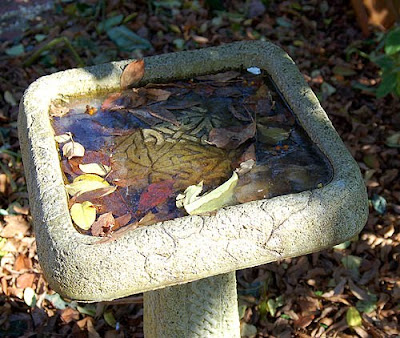
I should have dismantled the urn fountain weeks ago but the birds have been enjoying it so much in the mornings that I hated to take it from them. I'm not sure how cold it has to be for running water to freeze but I didn't want to take a chance for last night's freeze to harm the urn or the pump.


Time for a clean-up job (does anyone have any tips for removing the algae gunk?) and storage. Until next spring -


Some roses are refusing to give up the fight. "Mrs. B.R. Cant" is loaded with buds at the moment -


As is "Nearly Wild" -


The ornamental grasses can be very attractive in the winter -


The hydrangeas don't look too happy though -


Remember the gorgeous camellia I showed you a few days ago? Today it doesn't look too hot -


However, the camellia "Pink Icicle" doesn't seem phased -


Share/Bookmark

Junior's Rocky Road Cheesecake


I’ve never been to New York City but if I ever do get there, one of the places I want to visit is Junior’s, home of the #1 New York cheesecake (at least that is their claim!). They now have a book, Junior's Cheesecake Cookbook: 50 To-Die-For Recipes for New York-Style Cheesecake. I got the book about a year ago when I joined a cookbook book club and I’m just now getting around to trying one of the recipes.

I love cheesecake, especially chocolate cheesecake, so the first recipe I’ve attempted is the Rocky Road Cheesecake on page 125. This was a hard choice because all of the recipes look fantastic. A unique feature of this cheesecake is the crust – it is not the traditional graham cracker crust but a sponge cake crust. More time consuming to make but worth it in the end.

Okay, so this entire recipe is time consuming! All the recipes in the book are very precise and the authors discuss every detail that goes into their world-famous cakes - from the type of pans they use to the ingredients - all basic stuff. Was it worth the time and effort? You bet! It was creamy and rich (a small piece goes a long way!), and one of the best I've made. This is a high quality cheesecake that will impress your friends and relatives. I can't wait to try another recipe.

• Junior's Dark Chocolate Sponge Cake Crust
• 1/3 cup sifted cake flour
• 3/4 teaspoon baking powder
• Pinch of salt
• 2 extra-large eggs, separated
• 1/3 cup sugar
• 1 teaspoon pure vanilla extract
• 2 tablespoons unsalted butter, melted
• 1/4 teaspoon cream of tartar
• 2 oz. bittersweet chocolate, melted and cooled


1. Preheat the oven to 350°F and generously butter the bottom and sides of a 9-inch springform pan (preferably a nonstick one). Wrap the outside with aluminum foil, covering the bottom and extending all the way up the sides.

2. In a small bowl, sift the flour, baking powder, and salt together.

3. Beat the egg yolks in a large bowl with an electric mixer on high for 3 minutes. With the mixer running, slowly add 2 tablespoons of the sugar and beat until thick light yellow ribbons form, about 5 minutes more. Beat in the extracts and the melted chocolate.

4. Sift the flour mixture over the batter and stir it in by hand, just until no more white flecks appear. Now, blend in the melted butter.

5. Now, wash the mixing bowl and beaters really well (if even a little fat is left, this can cause the egg whites not to whip). Put the egg whites and cream of tartar into the bowl and beat with the mixer on high until frothy. Gradually add the remaining sugar and continue beating until stiff peaks form (the whites will stand up and look glossy, not dry). Fold about one-third of the whites into the batter, then the remaining whites. Don't worry if you still see a few white specks, as they'll disappear during baking.

6. Gently spread out the batter over the bottom of the pan, and bake just until set and golden (not wet or sticky), about 10 minutes. Touch the cake gently in the center. If it springs back, it's done. Watch carefully and don't let the top brown. Leave the crust in the pan and place on a wire rack to cool. Leave the oven on while you prepare the batter.


For the cheesecake:
• 8 oz. bittersweet or semi-sweet chocolate
• Three 8 oz. packages cream cheese (use only full fat)
• 1 1/3 cups sugar
• ¼ c. cornstarch
• 1 TBS. pure vanilla extract
• 2 extra-large eggs
• ¾ c. heavy or whipping cream
• ¾ c. dr-roasted peanuts (preferably unsalted), coarsely chopped

For the Rocky Road topping:
• One 7.5 ounce jar Marshmallow Fluff
• 1 c. miniature marshmallows
• ¼ c. whole dry-roasted peanuts (preferably unsalted)
• 2 oz. bittersweet or semi-sweet chocolate, melted

1. Preheat the oven to 350°F. Generously butter the bottom and sides of a 9-inch springform pan. Wrap the outside with aluminum foil, covering the bottom and extending all the way up the sides. Make and bake the cake crust and leave it in the pan. Keep the oven on.

2. Melt the 8 ounces chocolate and set aside to cool. Put one package of the cream cheese, 1/3 cup of the sugar, and the cornstarch in a large bowl and beat with an electric mixer on low until creamy, about 3 minutes, scraping down the bowl several times. Blend in the remaining cream cheese, one package at a time, scraping down the bowl after each one. Increase the mixer speed to medium and beat in the remaining 1 cup sugar, then the vanilla. Blend in the eggs, one at a time, beating well after adding each one. Beat in the melted chocolate, then the cream, just until completely blended. Don’t overmix! Stir in the chopped peanuts. Gently spoon the batter on top of the crust.

3. Place the cake in a large shallow pan containing hot water that comes about 1 inch up the sides of the springform. Bake until the edges are light golden brown and the top is slightly golden tan, about 1 1/4 hours. Remove the cheesecake from the water bath, transfer to a wire rack, and let cool for 2 hours (just walk away-don't move it). Then, leave the cake in the pan, cover loosely with plastic wrap, and refrigerate until completely cold, preferably overnight or for at least 4 hours.

4. To serve, release and remove the sides of the springform, leaving the cake on the bottom of the pan. Place on a cake plate. Spread the marshmallow fluff over the top and down the sides – but stop before covering the sides completely. Be sure to leave some of the chocolate peeking out near the bottom. Scatter the marshmallows on it, then the whole peanuts. Fit a pastry bag with a small round tip (#2 or #3), spoon in the melted chocolate, and pipe continuous swirls of lines on top, making the lines about 3/8 inch apart. Refrigerate until ready to serve. Slice the cold cake with a sharp straight-edge knife, not a serrated one. Cover any leftover cake and refrigerate or wrap and freeze for up to 1 month.


Share/Bookmark