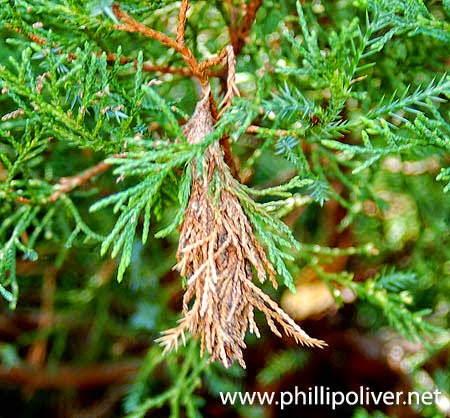
The name sounds disgusting, doesn't it? Actually, they don't look that menacing when you see them on the plant. In fact, they can be easily mistaken for a cone or part of a plant. Don't be misled though - these devious critters are highly destructive and can kill a plant before you realize what has happened. There are different types of bagworms but the evergreen bagworm is the one addressed here. It is prevalent in the eastern U.S. and attacks evergreens such as arborvitae, red cedar, junipers, etc. Even decidious trees are vulnerable, however, damage is minimal to them because they shed their leaves. This is what they can do - Bagworms are actually the larvae of a moth. They are 1-2 inches long and create a cocoon made up of silk and bits of dead foliage and twigs. During the summer months, the larvae consumes plant foliage and retreats into the cocoon when disturbed. The larvae carries the cocoon (or bag) around and it larger and larger as they eat more and mor...