Posts

Showing posts from September, 2010

Birmingham Botanical Gardens

Image
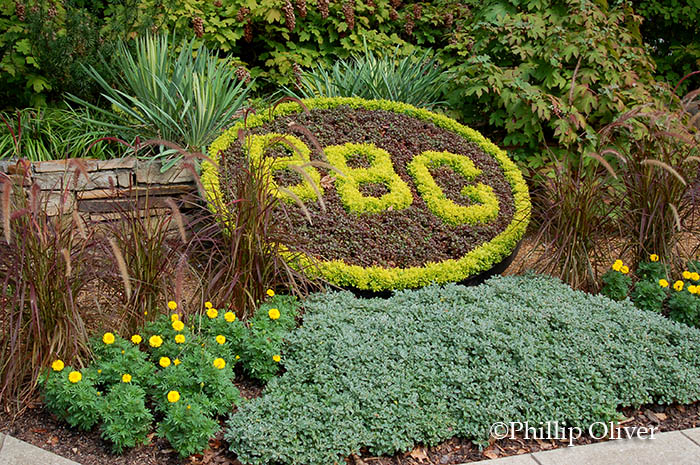
A container planting near the main building I'm recouping from a serious case of poison ivy (again!) I came in contact with some while cleaning out a fence row on my mother's property on Saturday. I knew this would be bad when I woke up Sunday morning with my arms and legs covered with an ugly rash. I got a shot and the usual Prednisone pills which leave me irritable, groggy and restless. I'm feeling better this afternoon and wanted to share some photos of the Birmingham Botanical Gardens. Last Thursday and Friday, I attended an Archivist conference there for my job, but I've been to the gardens many times before. I lived in Birmingham briefly right after my college graduation and visited often. It was a great place to take photographs, to relax and just get away from it all. It was just as beautiful as I'd remembered it although many areas had changed somewhat and there were new things to see. Apparently the drought has been worse there than in Fl...

Rain, glorious rain!

Image
At this point, this is better than a Monet! At least 1.5" since 6 a.m. and it continues... Text and photos by Phillip Oliver, Dirt Therapy

The parched garden

Image
One of my favorite classic movies is "Auntie Mame" and when looking at the garden this time of year, I always think of the scene where Brian O'Bannion, the ghostwriter hired to write Mame's memoirs, presents her with "a slim volume of his poetry entitled "The Parched Garden". I think it is funny but our actual garden is no laughing matter. I can't remember the last time we received any significant rainfall and although I'm trying to keep everything watered as best as I can, the water from the hydrant is no match for actual rainwater.  Some plants do better than others in these dire conditions. The following is one that doesn't - a paniculata hydrangea. It is planted in an extremely dry and poor area anyway. It is a disgusting and disheartening photo. I am very concerned about the following shrub, one that I searched high and low for. It is a tea viburnum (Viburnum setigerum) and has a gorgeous display of red berries in the fall. It is...

The Golden Age of Couture Exhibit

Image
Michael and I and our friend Cindy went to Nashville yesterday for the final day of the Golden Age of Couture Exhibit. We actually went on Labor Day at the spur of the moment and enjoyed it so much that we wanted to go back before the exhibit left. Nashville was the only city in the United States where the exhibit was held. Michael likes fashion the way I like gardening but I was pleasantly surprised and fascinated by what we saw and I even learned a few things. Cameras were not allowed inside the gallery so I borrowed these from the Internet. The exhibit featured dresses from the late 1940s and 1950s from such designers as Christian Dior, Coco Chanel, Cristóbal Balenciaga, Hubert de Givenchy. They were truly works of art. Here is some of what we saw - In addition to the dresses, hats, shoes and jewelry, there were many photographs by fashion photographer Richard Avedon as well as other photographers and artists sketches, film clips and various memorabilia. Text and phot...

Late summer roses

Image
Roses are one of the most drought resistant plants available but when the summer temps get really hot, the flowers are minimal. In late summer and early fall, however, they usually bounce back with blooms that hang on until the first frost. This is especially true for the older roses. The above is "Weeping China Doll", a polyantha rose that is very easy to grow. I grow it as a stand-alone shrub but I've seen it grown as a climber. To get more fall blooms, trim back roses in mid-summer and continue fertilizing through August. As fall approaches, stop giving roses fertilizer because this will prompt them to put out growth that will be nipped by frost. "Weeping China Doll" is a very dense, twiggy rose. For a rose like this, I cut it back with hedge shears or the electric trimmer. It sounds brutal but it won't hurt the rose. Text and photos by Phillip Oliver, Dirt Therapy

Kudzu - the vine that ate the South

Image
I'm house/pet sitting for some friends for three weeks. They live on a beautifully wooded hillside that I'm itching to landscape but in the untended areas in their neighborhood, we have this - I took this photo while walking Emmie (who you can see at the end of this post). This field is right next door to their house and extends down to the river. Unless you live in the south, you might not recognize Kudzu ( Pueraria lobata ) , or as many people call it "the vine that ate the south". I was reading a rather serious, scientific website and was amused when I came across this statement about caring for it: "Mulch with cinder blocks, fertilize with Agent Orange, and prune daily." hehe Of course, no one in their right mind would be growing kudzu in their garden (or anywhere near their property) but, believe it or not, people once did. The plant is native to China and Japan and its appearance in this country came about in 1876 when it was introduced at the...